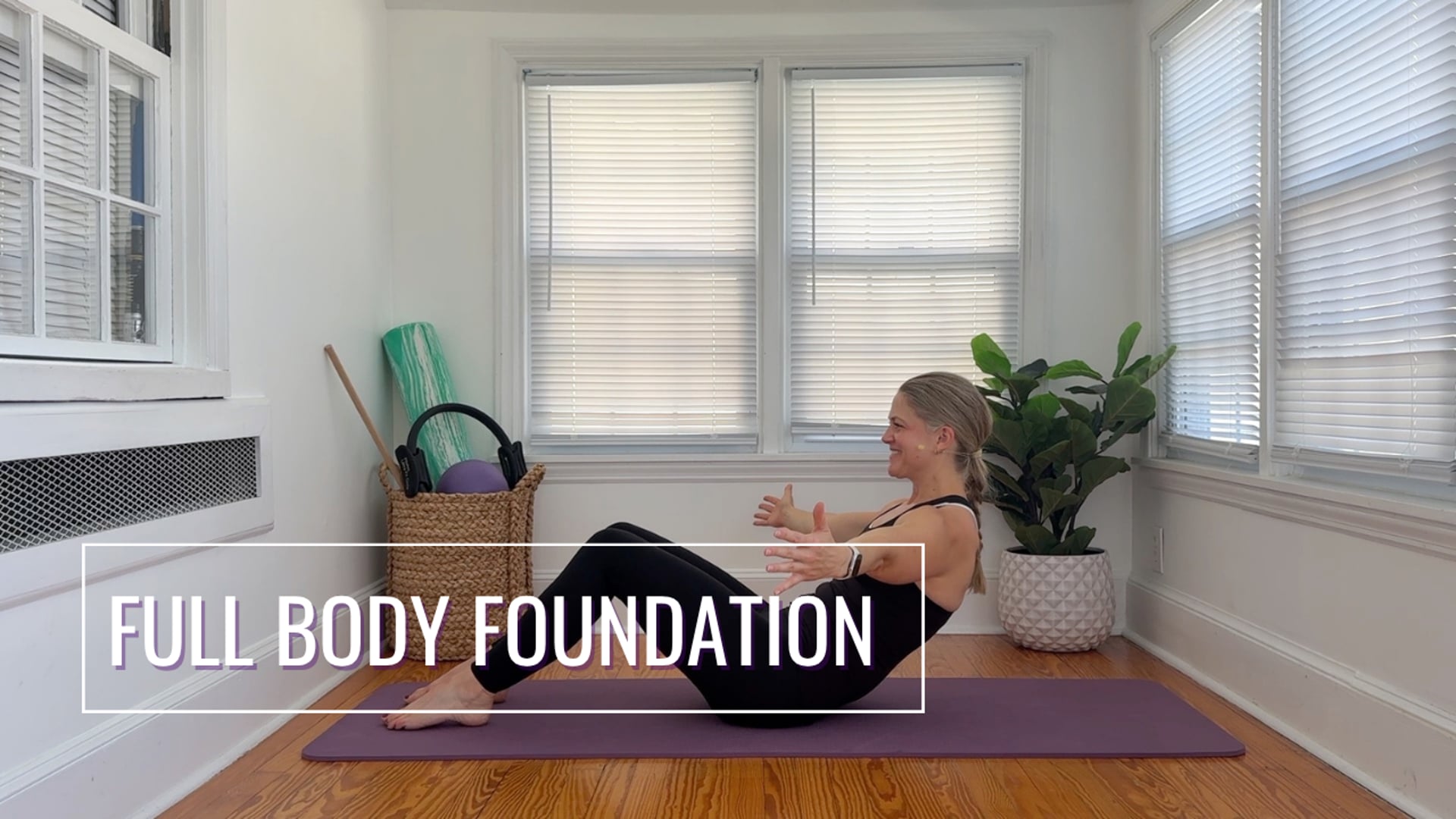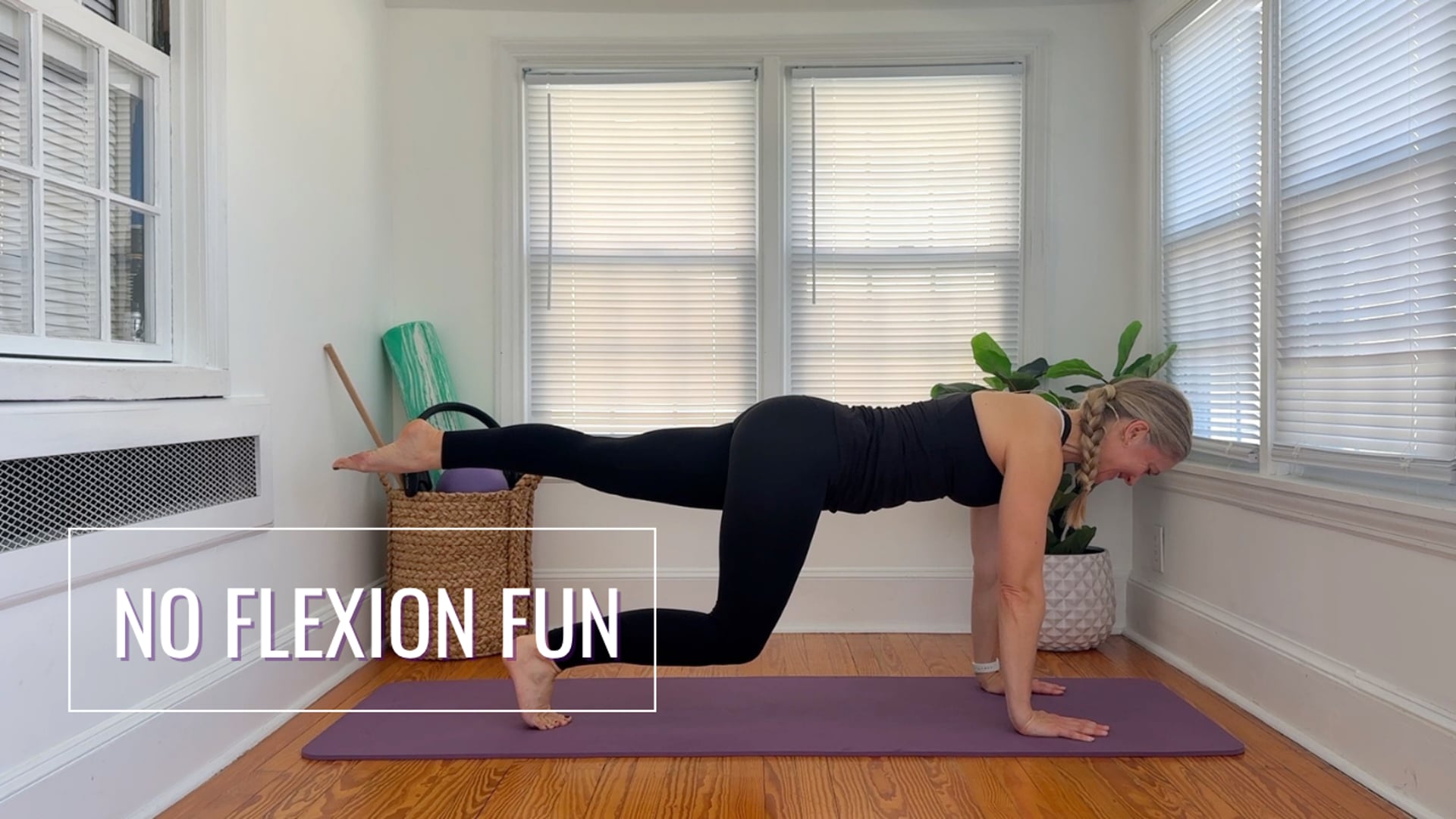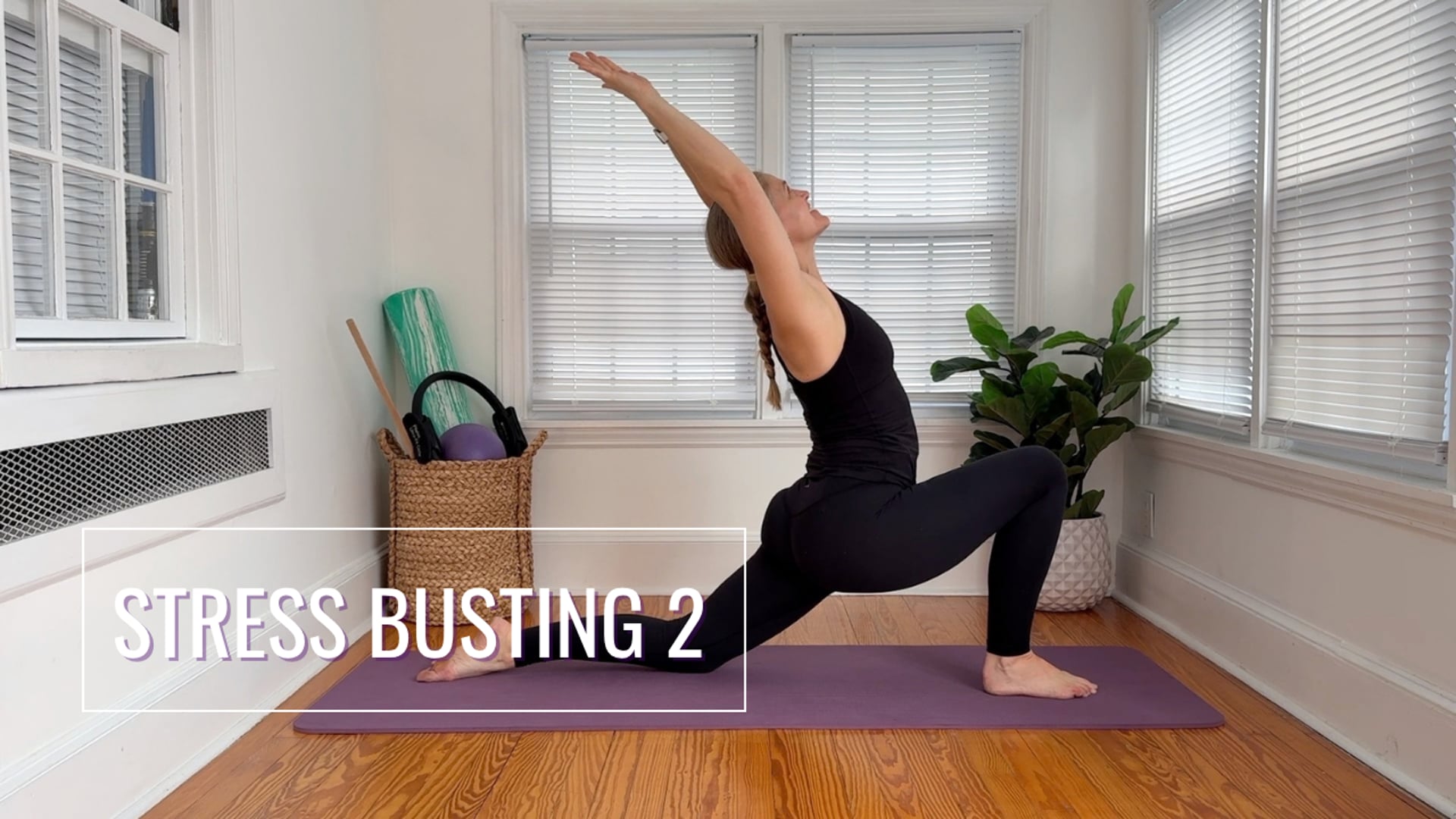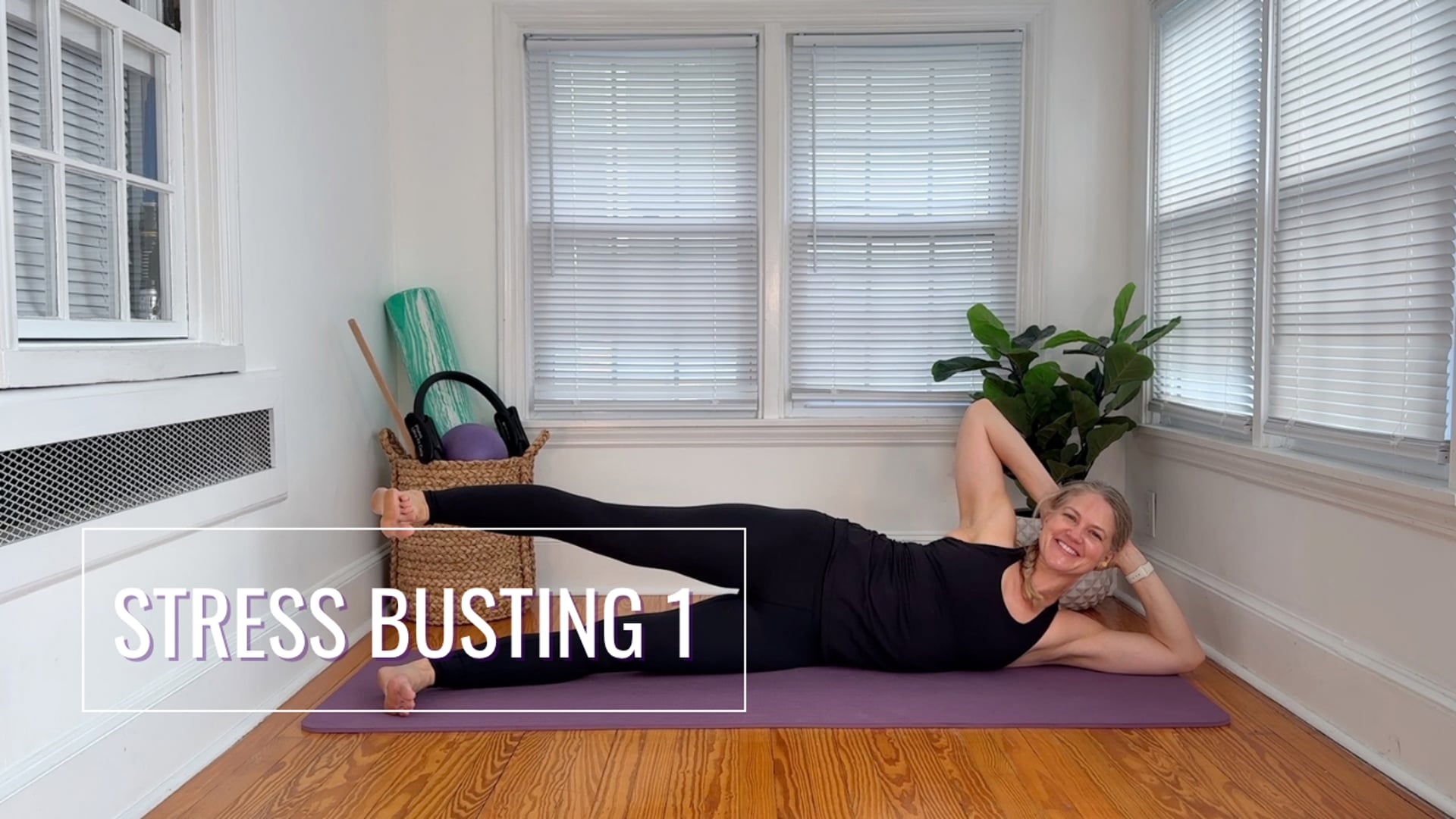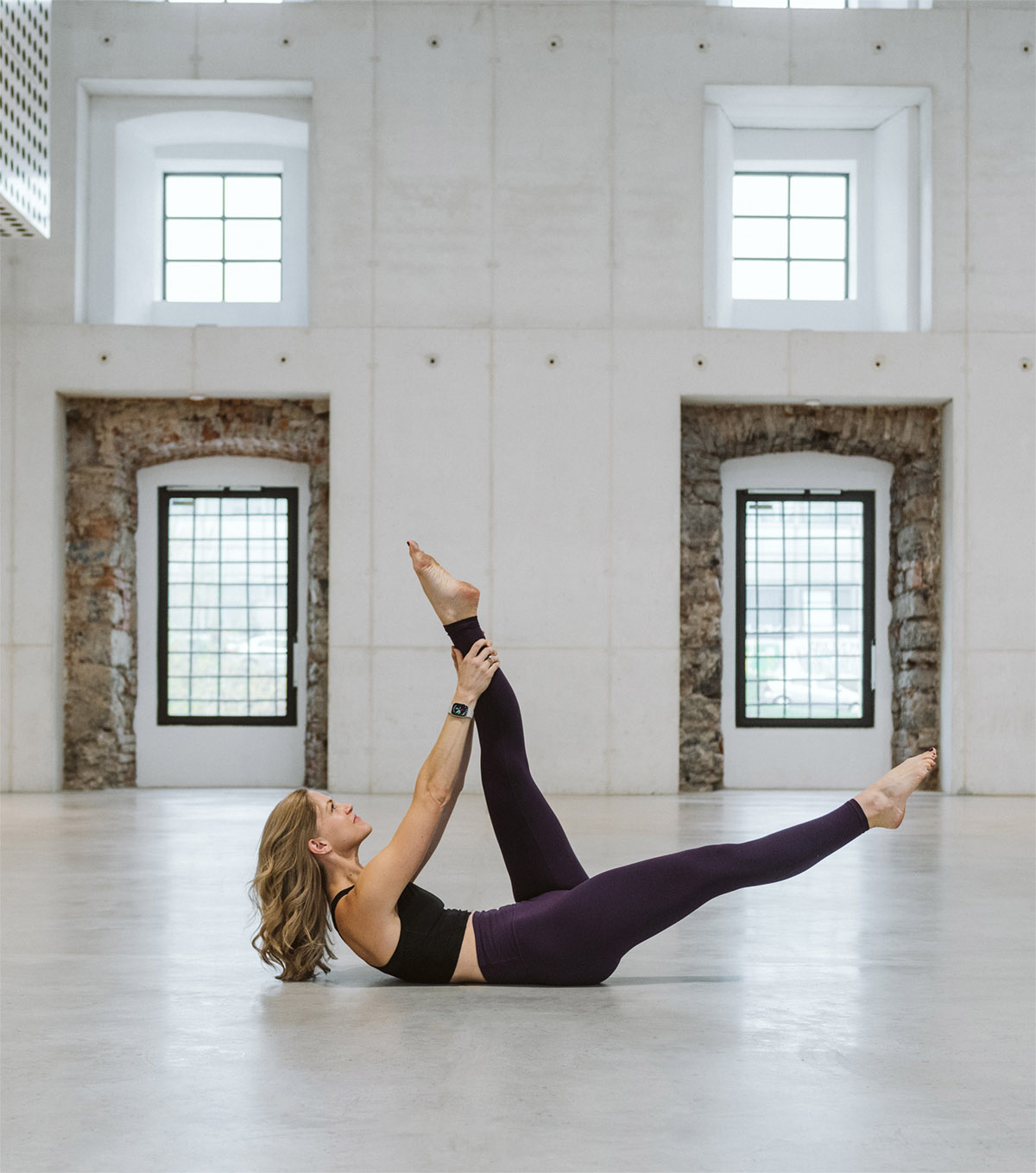

The Double Leg Stretch is a perfect example of all the Pilates principles working together. Remember, a solid and stable center is more important than having a big range of motion. Please let me know if you have any questions or need modifications or suggestions based on your own body. Enjoy!
Videos
Tutorial: Supine Spine Twist

I use Supine Twist or Supine Spine Twist in many of my classes. It is a great way to warm up the obliques and stretch out the spine for the more challenging work coming up in the class. This is an exercise that looks easy but the details matter. Remember, keep your hips and knees stacked throughout the movement and anchor through your shoulders. A smaller range of motion is often better with this exercise. Enjoy, and let me know if you have any questions.
Tutorial: Foam Rolling

Here is a quick foam rolling tutorial. I filmed this class in my living room because I think that is a great place to do your rolling. I often do it in from of the TV at night and it doesn’t feel like a chore. The benefits of foam rolling are numerous, and I think it makes a big difference in how my own body feels and performs. Give it a try and let me know what you think!
I recommend a firm, smooth roller but not one that is excessively firm. You can damage your tissue and make the work excessively painful with too dense a roller. I also believe that a full size roller is a better investment than a shorter one because you can do more with them; including a full length Pilates class.
Tutorial: Single Leg Circle

Single-Leg Circles are deceivingly challenging. However, this exercise is excellent for learning and building pelvic stability. Enjoy!
Tutorial: Rolling Like a Ball

Joseph Pilates wanted his work to be both functional and playful…Rolling Like a Ball is a great example. I hope this tutorial demystifies this challenging but fun exercise. Enjoy!
Tutorial: Pelvic Curl/Bridging

Spinal articulation is a strong focus within the Pilates repertoire. This tutorial breaks down the pelvic curl or bridging. Remember the movement starts with the abdominals and the glutes and hamstrings help you lift.
Tutorial: Roll-up
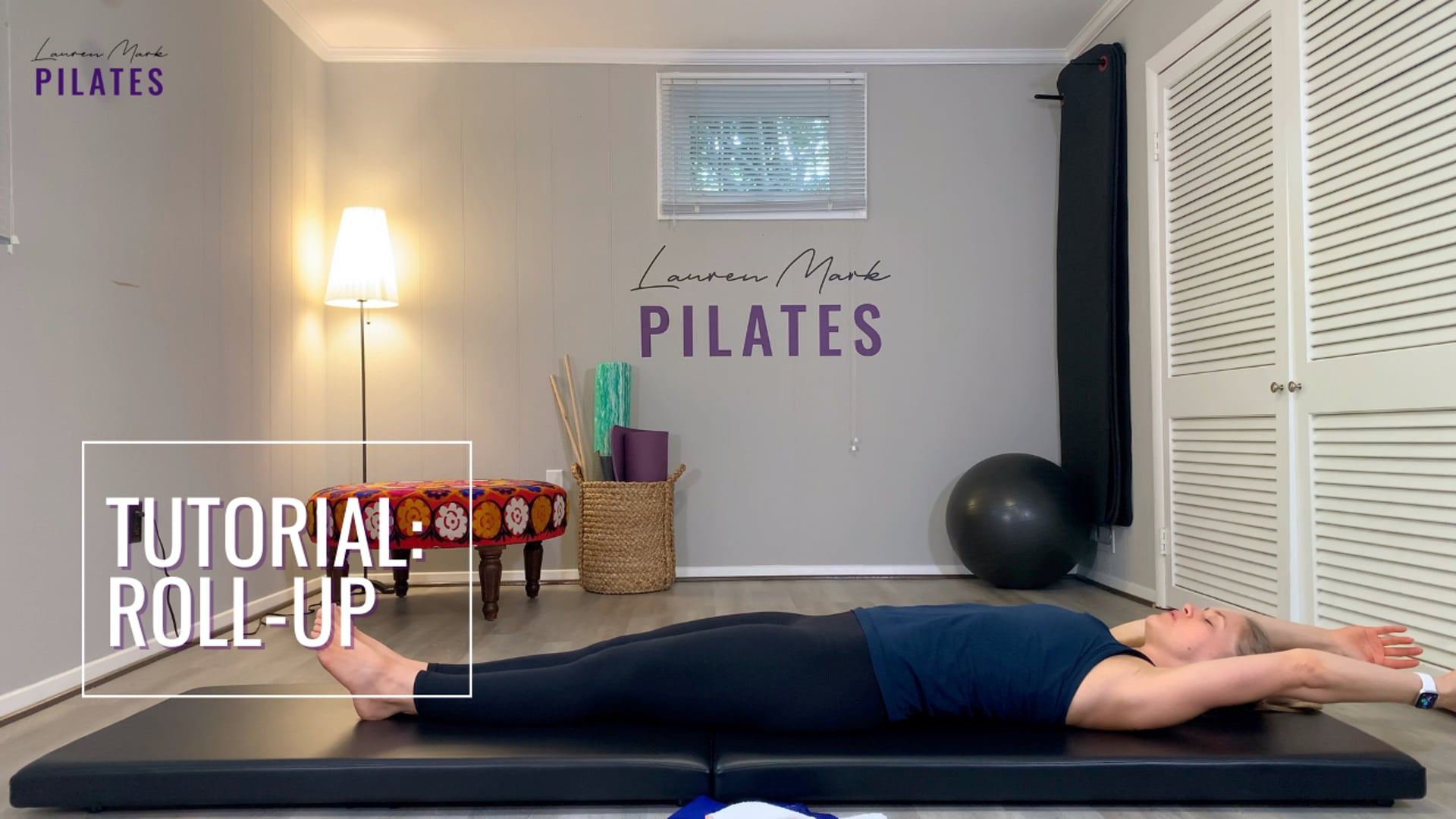
The roll-up is one of the most challenging and frustrating exercises in the Pilates repertoire. It requires a great deal of strength, flexibility, and some finesse. In this tutorial, I will help you master the Roll-up by breaking it down and the use of props.
Tutorial: The Hundred

The Hundred is the quintessential Pilates exercise. The Hundred is a full-body exercise in which you vigorously pump the arms with 100 counts of breath (inhaling for five counts and exhaling for five counts).
Joseph Pilates designed The Hundred to be a warm-up, and traditionally it comes at the beginning of a Pilates session.
The Hundred is a very challenging exercise, but this tutorial breaks it down to be accessible for anyone.
Tutorial: Quadruped

Quadruped, or all fours, is a foundational position used in Pilates. In this tutorial, I break down Quadruped so you can always start from a place of strength and control. This will make all of your front support exercises (think planks) stronger and help to alleviate wrist pain and other discomforts.
Tutorial: Swan

Being able to move your spine in all directions is super vital to the overall health and wellbeing of your spine. Since we spend so much of our lives in spinal flexion (i.e., looking down at our phones, computer, etc.), back extension is essential for counteracting all that flexion. Swan is a great way to learn back extension, and in this tutorial, I am breaking it down for you.
Tutorial: Planks & Front Support

Doing a proper plank or front support is so important. The correct form gets you the most out of the exercise and keeps you from pain and injury. In this tutorial, I break down the preps and your proper form so you can master your planks in no time!
Tutorial: Side-Lying Series

I have a side-lying series in almost all of my Pilates classes. This is a foundational series within the Pilates repertoire, and for a good reason. In this tutorial, I break down the mechanics of all the side-lying work so you will get the most out of these exercises. Side-lying is excellent for strengthening the hips, glutes, and obliques and building pelvis stability; it is always a burner that makes it feel like you worked! What’s not to love?!
Tutorial: Abdominal Series Breakdown

This tutorial breaks down the Pilates Abdominal Series. Use this tutorial to deepen your understanding and enhance your practice.
Tutorial: Teaser

The Teaser is a paramount Pilates exercise. It takes tremendous strength, flexibility, and control. Today, I will walk you through Teaser Prep, Teaser I, Teaser II, and Teaser III (That’s right, there are 3 Teaser versions). Remember, this is an advanced exercise. Don’t be afraid to stick with the modifications and/or prep as you continue to build strength and flexibility. If you struggle with your Roll-up, you will have trouble with the Teaser. Check out my Roll-up Tutorial if you still need to fine-tune your technique.
Tutorial: Mounting and Adjusting your TRX

I love the suspension trainer (aka the TRX). It is so versatile and inexpensive, and you can use it anywhere. In this tutorial, I break down how you can mount your TRX and the basic adjustments you will need to make in a typical Pilates Suspension Method (PSM) class.
Tutorial: Spine Stretch Forward & Spine Stretch Side

Spine Stretch Forward and Spine Stretch Side can be deceivingly challenging. The hardest part may be getting into the starting position for those of you with tight hamstrings.
It is more important to start with a straight spine than straight legs. Feel free to prop up your pelvis or bend your knees to achieve this starting position.
This is a stretch for the spine, not the hamstrings. By bending the knees and/or elevating the pelvis, you can take the hamstrings out of the equation and concentrate on the spine.
Tutorial: Saw

Saw is a lovely exercise that marries flexion and rotation. Keep your hips stable and level as you rotate, and then flex your spine as you reach your opposite hand towards your baby toe. Don’t be afraid to bend your knees or elevate your pelvis if you have tight hamstrings. If you feel your legs sliding forward on the mat as you rotate and reach, you are moving your pelvis. Aim for a smaller range of motion with lovely stable hips to get the most out of this exercise.
Tutorial: Side Bend Twist

Make sure you check out my Side Plank Tutorial so you can find a starting position that works best for your body. Remember to keep your hips squared to the front as you rotate from your upper spine. Remember to keep your shoulder in a solid and stable position throughout this exercise.